When a plunger isn't going to cut it
One slow sink is usually a local clog. If the tub, the basement floor drain and a toilet all act up around the same time, the blockage is probably out in the main line, and no amount of plunging upstairs will fix that.
A few signs worth calling about: water pooling around a floor drain, gurgling when another fixture drains, a smell that comes and goes, or a drain that clears for a week and then slows down again. That last one means something is still sitting in the pipe.
How a drain cleaning visit works
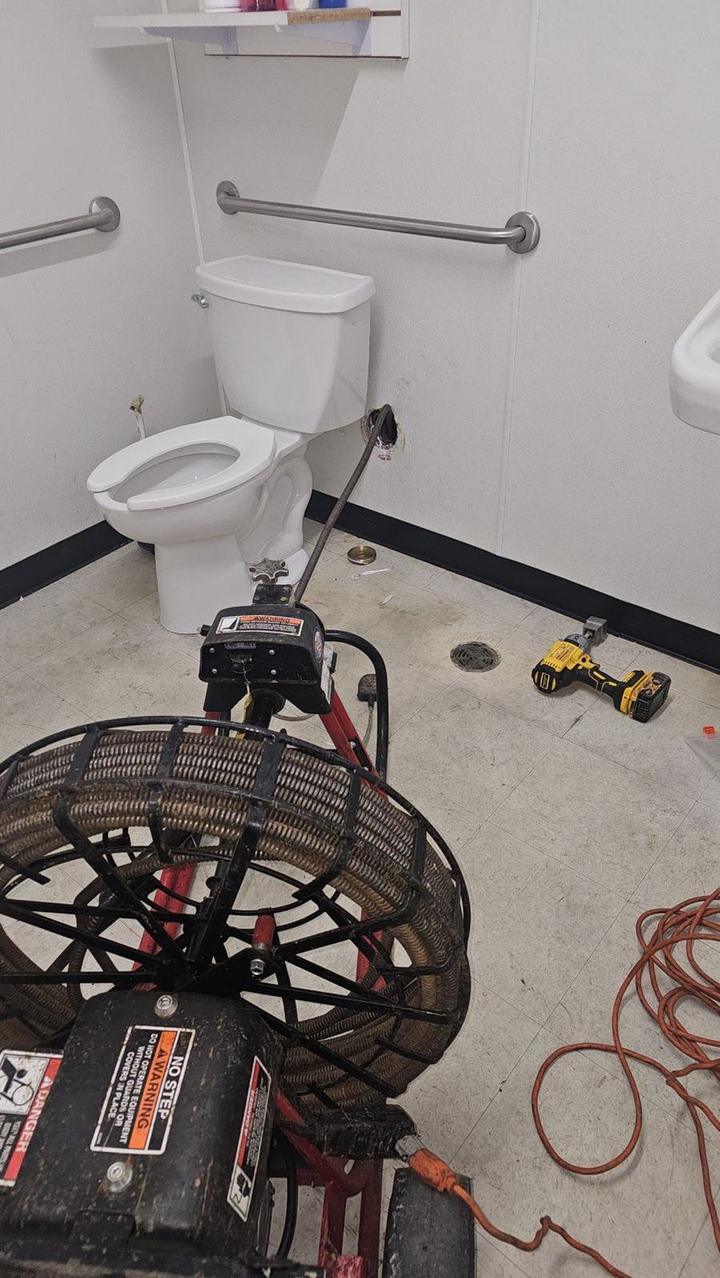
We start by asking what you've noticed and where, then look at the fixture and the nearest cleanout. From there we pick the right tool for the line, whether that's a hand auger for a sink trap or a machine with a longer cable for a main line.
Once water is moving we run it, check the other fixtures on the same line, and tell you what we found. If the pipe looks damaged or the clog keeps coming back, we'll say so and suggest a camera inspection instead of just clearing it and leaving.
What usually causes the clog
In older Philadelphia row homes and the surrounding suburbs, it's often a mix: grease that hardened in a kitchen line, years of scale inside cast iron, or tree roots that found a joint. Wipes labeled flushable cause more trouble than people expect, and so does a garbage disposal asked to do too much.
Businesses see their own pattern, mostly grease, floor drain debris and heavy daily use. The cleaning approach changes, but the goal is the same: get the line open and figure out why it closed.
Where we provide drain cleaning
We cover Philadelphia, Bucks County, Montgomery County and New Jersey, and we're open every day from 8AM to 10PM.